Speaking · Seminars · Consulting
Bring the law into the room.
A lawyer’s precision about what the rules actually say, and a practitioner’s feel for why this medicine matters.
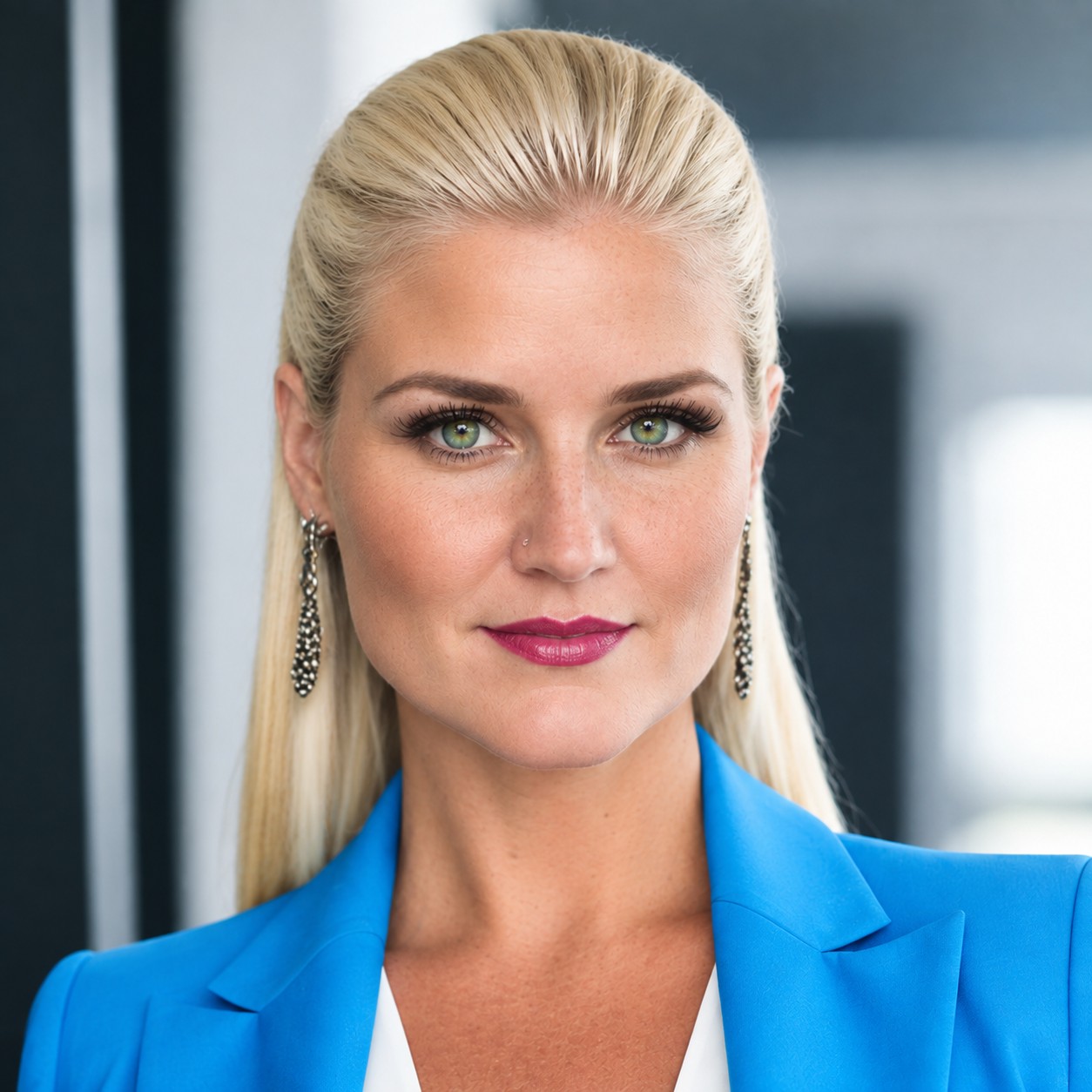
Deja Correia is an attorney working at the frontier of psychedelic law, policy, and access. She is a founder of Wavelength, San Diego’s psychedelic policy and practice collaborative. She serves as counsel to clinics and manufacturers and as a consultant on legislation, and she co-authored an amicus curiae brief in Jensen v. Utah County — one of the most closely watched religious-freedom cases in the field, now on appeal before the Tenth Circuit. Trained through the California Institute of Integral Studies’ Psychedelic-Assisted Therapies and Research program, she advises on religious-freedom (RFRA) protections, treatment access, end-of-life care, and harm and risk reduction, and writes on the evolving legal landscape at The Enlightened Esquire.
She is one of very few practicing attorneys holding a Certificate in Psychedelic-Assisted Therapies and Research from CIIS. That training, paired with a full-service California practice spanning organization formation and governance, real estate, contracts, and estate planning, lets her speak the language of facilitators, clinic founders, and religious-use organizations with practical depth — not just regulatory commentary.
What she speaks about
Forming a defensible psychedelic organization
What founders consistently get wrong when structuring their work — and what good organizational architecture actually looks like. Entity selection beyond the LLC. Governance that survives scrutiny. Founder agreements done right.
Estate planning when assets touch Schedule I
A real gap most attorneys will not touch. Practitioners and operators need legacy planning that takes their work seriously. What standard estate plans miss. Trusts, intentions, and documentation. Family communication and protection.
Religious-use organizations done carefully
The careful, considered way to structure a religious-use organization, including the questions most founders skip. RFRA basics in plain language. Indigenous tradition and respectful structure. Governance, documentation, risk.
Background and selected work
- Amicus curiae brief, Jensen v. Utah County — co-author. Religious-freedom litigation over a psychedelic church’s sacrament and scriptures, now on appeal before the United States Court of Appeals for the Tenth Circuit, No. 25-4115.
- The Enlightened Esquire — ongoing legal writing on FDA and DEA action, California legislation, religious-use organizations, and clinic compliance.
Selected speaking
- The Legal Landscape of Psychedelics: Navigating the Seismic Regulatory Shift from Drug Enforcement to Health Policy — faculty, San Diego Psychiatric Society continuing medical education symposium, Expanding Horizons: Psychedelic Integration in Modern Psychiatry. San Diego, June 9, 2024. Jointly accredited by the American Psychiatric Association and the ACCME; 12 AMA PRA Category 1 Credits for the full course. The only attorney on a faculty of psychiatrists and researchers from UC San Diego, the VA San Diego Healthcare System, Kadima Neuropsychiatry Institute, and the University of Zurich.
- The Current Landscape: Psychedelic Climate in 2026 — presenter at the inaugural convening of Wavelength, San Diego, June 2026. Attended by clinicians, UC San Diego researchers, attorneys and harm-reduction advocates, with the Jensen litigation presented as the legal case study.
- Seed Series — returning panelist. Business-law panelist for two Seed Series events in San Diego: Building Wealth Outside the Stock Market, October 28, 2025, and Cannabis Meets Fungi, August 24, 2025.
- Set, Setting & Statute — a psychedelic mastermind for the curious and the committed. A plain-English map of the medicine, the legal landscape at the federal, state and local levels, and the credible ways to get involved.
Credentials
- J.D., California Western School of Law
- Certificate in Psychedelic-Assisted Therapies & Research, California Institute of Integral Studies
- Founding member, Psychedelic Bar Association
- CME faculty, San Diego Psychiatric Society (APA / ACCME accredited), 2024
- Top 200 Global Psychedelic Lawyers, 2024–2025
- State Bar of California, No. 345979
- Founder, Wavelength — San Diego Psychedelic Policy & Practice Collaborative
Format and logistics
- Formats: solo interview, panel, AMA, live event, seminar
- Recording: professional microphone, quiet home studio, broadband
- Lead time: two to four weeks; faster for news-pegged episodes
- Travel: San Diego based; available for domestic and international travel
Questions that make for a good conversation
Use these as written, or as a starting point. Each one is drawn from work she actually does, so none of them need a warm-up.
For clinical and medical audiences
- Ketamine clinics operate legally today while everything else waits on the FDA. Where exactly is that line, and what do practitioners get wrong about it?
- What belongs in an informed consent document when the patient will be in a non-ordinary state for six hours?
- Where is the line between integration coaching and practicing therapy, and how do people cross it without noticing?
- If a psychedelic therapy is approved, what would a clinic need to already have in place on day one?
- What does California’s corporate practice of medicine doctrine mean for a physician who wants to open a practice with a non-physician partner?
For founders, operators and investors
- What is the biggest legal mistake founders make in their first ninety days?
- Why is the default LLC the wrong entity for a meaningful share of these businesses?
- Benefit sharing: how do you tell a company that means it from one that is only saying it?
- How should an investor surface a psychedelic company’s regulatory risk in diligence — what questions actually work?
- What is the conversation co-founders skip, and what does skipping it cost them later?
For general and policy audiences
- How can Americans legally access psychedelics right now, and who does each pathway actually reach?
- What does the Religious Freedom Restoration Act require of a religious-use organization, and what does it not protect?
- Decriminalization and legalization get used interchangeably. What does building on that confusion actually cost someone?
- Someone with a terminal diagnosis wants to try psilocybin. What does the law allow, and where does Right to Try stop short?
- California has taken four runs at this since 2023. What did each attempt change, and what does that tell us about what passes?
On her practice and her path
- How does training in psychedelic-assisted therapy at CIIS change the legal advice you give?
- What do clinicians ask you that other lawyers never get asked?
- What should a facilitator know before signing their first independent contractor agreement?
- You co-authored an amicus curiae brief in Jensen v. Utah County. What is at stake there for organizations that are not parties to the case?
- You were the only attorney on the faculty of an accredited CME symposium for psychiatrists. What did that room want to know?
And the one she is always glad to be asked: what is being repeated confidently in this field that simply is not true?
Request Deja to speak
Tell her the audience, the format, and the date. Bookings, media requests and seminar inquiries all start in the same place.
The Correia Law Firm · San Diego, California · 619.251.1432 · Speaker kit (PDF)
Educational only; not legal advice, and no attorney–client relationship is created. Psychedelics remain predominantly Schedule I under federal law and the legal landscape changes quickly.

